
Tongue Cancer Surgery
“Will I be able to speak and eat normally?”
Surgical planning that balances appropriate cancer removal with preservation and rehabilitation of speech and swallowing.
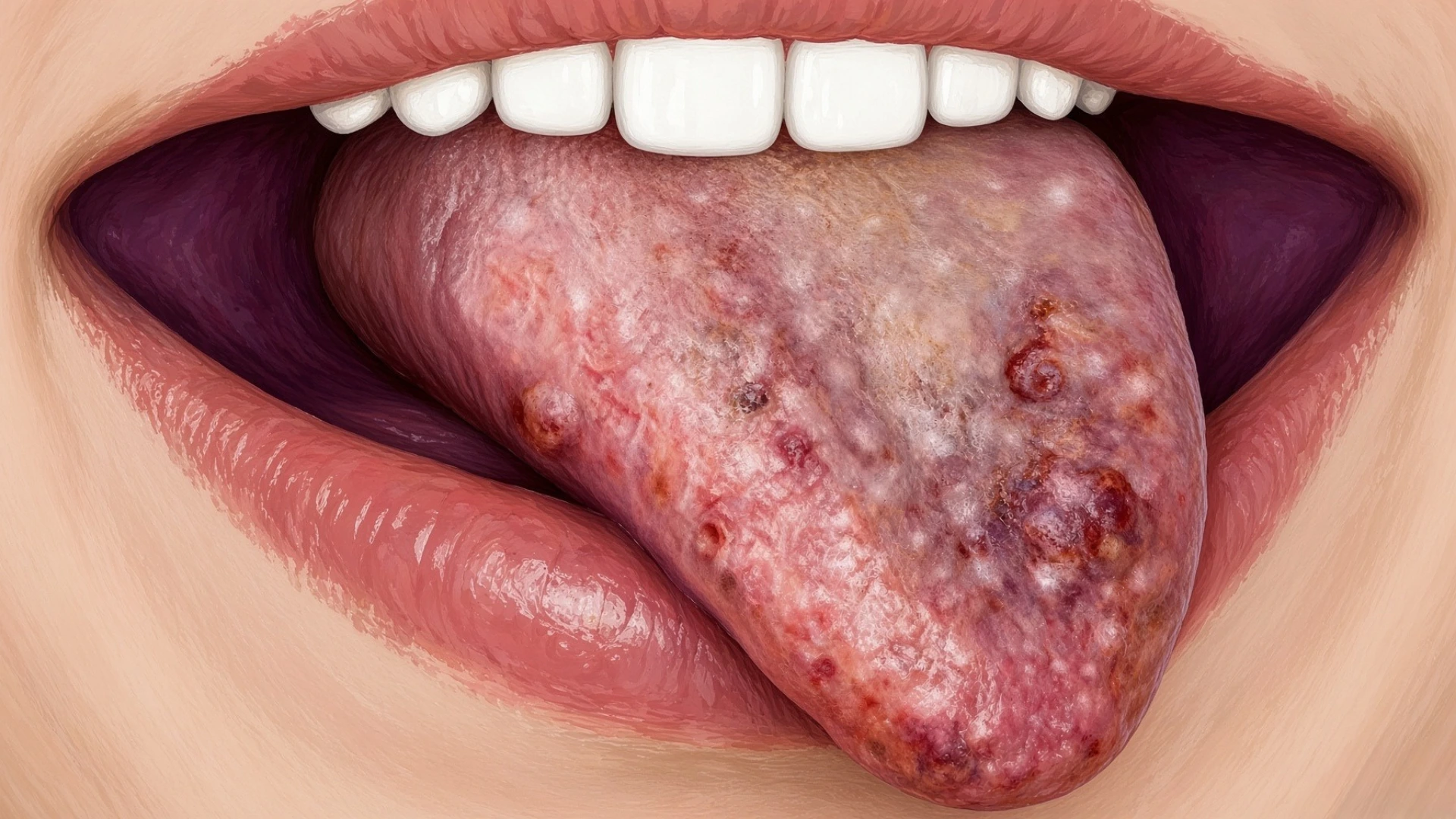
“Will I be able to speak and eat normally?”
The tongue is involved in speech, chewing, swallowing, taste and moving food through the mouth. Treatment therefore balances adequate cancer removal with preservation of as much useful function as safely possible.
First: which part of the tongue?
The front or mobile tongue forms part of the oral cavity. The base of tongue lies further back and forms part of the oropharynx.
Tumours arising in these areas can have different causes, staging systems and treatment strategies. “Tongue cancer” is not a single uniform disease.
Warning signs
- A non-healing ulcer
- Pain or bleeding
- A firm area
- Difficulty moving the tongue
- Painful swallowing
- Speech changes
- Unexplained ear pain
- A neck lump
PLANNING THE OPERATION
What determines the operation?
01
How large is the tumour?
Small superficial lesions require a different approach from large infiltrative cancers.
02
How deep is it?
Tumour depth contributes to assessment of behaviour and lymph-node risk.
03
Has it reached the neck?
Tongue cancers can spread to cervical lymph nodes.
04
What will remain functional?
Resection and reconstruction are planned together where needed.
Partial glossectomy
For selected cancers, only the affected portion of the tongue is removed. Smaller defects may heal or be closed directly, while larger resections can require reconstruction.
Larger tongue resections
More extensive cancers can require removal of a substantial portion of the tongue. Reconstruction becomes particularly important because tissue volume and mobility influence swallowing and speech.
Why neck dissection may be recommended
Cancer cells can travel through lymphatic pathways from the tongue to lymph nodes in the neck. Management of the neck is therefore an important part of treatment planning in appropriate cases.
Reconstruction: replacing tissue is not enough
After a significant tongue resection, reconstruction aims to create tissue that supports oral function. Local tissue or microvascular free-tissue transfer may be considered according to the defect.
The functional result depends on the amount and location of tongue removed, reconstruction, healing and rehabilitation.
Learning to speak and swallow again
Recovery does not finish when the wound heals. Speech and swallowing therapy can help patients adapt to anatomical changes and optimise remaining function. Nutritional support may be needed while swallowing recovers.
What about treatment after surgery?
Final pathology helps determine whether additional radiation or chemoradiation should be considered. For oral tongue cancers, surgery is an established treatment, with further treatment guided by stage and pathological findings.
COMMON QUESTIONS
Questions about tongue cancer surgery
General information to help you prepare. A consultation is required for advice about an individual diagnosis or treatment plan.
Does every tongue cancer require removal of the whole tongue?
No. The operation depends on tumour size, depth, location and extent. Selected cancers may be treated with partial glossectomy.
Why might the neck need surgery?
Tongue cancers can spread through lymphatic pathways to cervical lymph nodes, so neck treatment may be recommended according to risk and stage.
Will reconstruction be needed?
It depends on the amount and location of tissue removed. Larger defects are more likely to require reconstructive planning.
How are speech and swallowing supported after surgery?
Specialist therapy and nutritional support help patients adapt and work toward the best achievable function.
Have a persistent tongue ulcer?
A tongue ulcer that does not heal should be evaluated rather than repeatedly ignored or self-treated.