
Laryngeal & Pharyngeal Cancer
When cancer affects the voice box or throat
Evaluation and treatment planning that considers cancer control together with voice, breathing and swallowing.
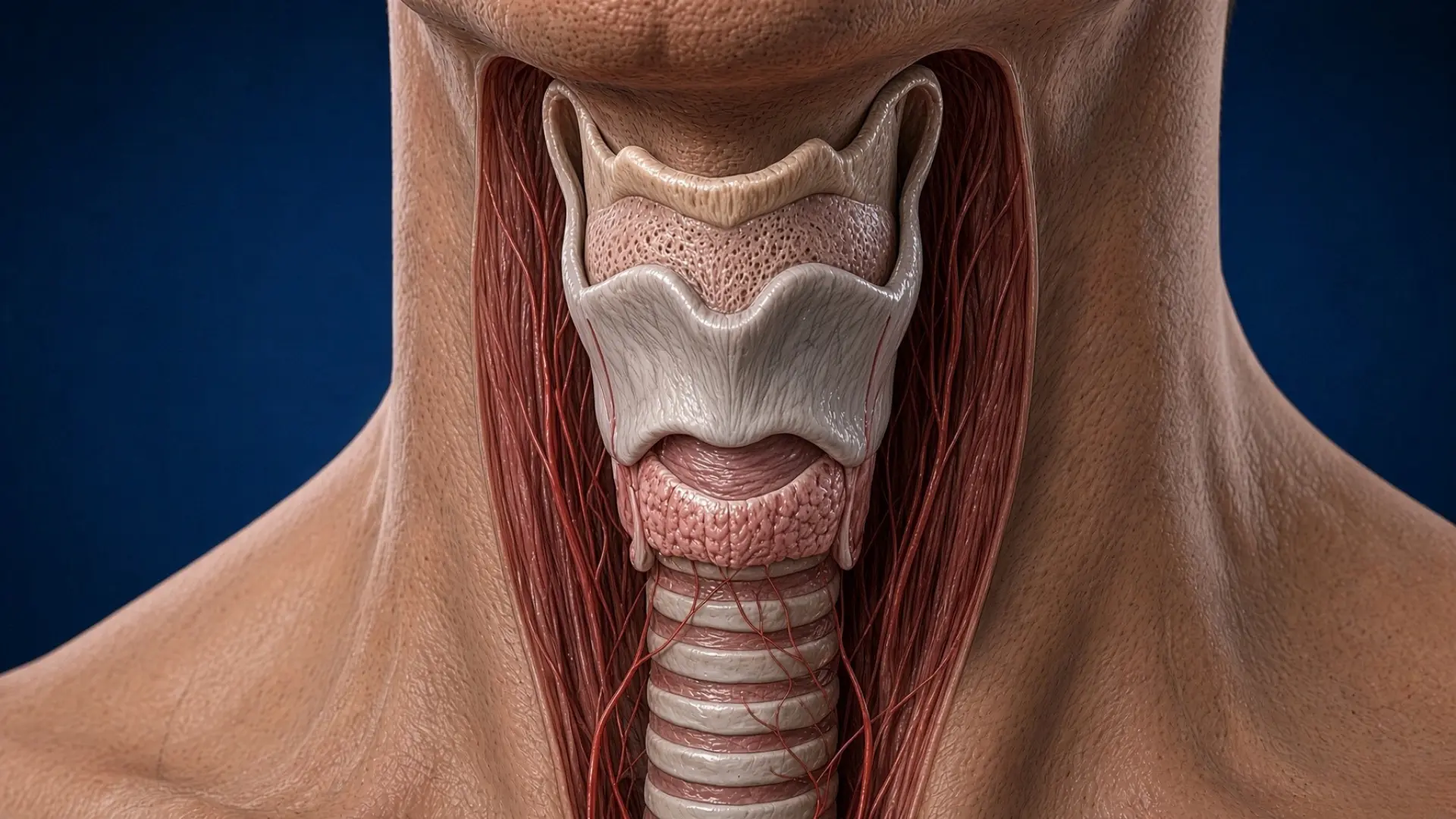
When cancer affects the voice box or throat
The larynx or voice box is responsible for more than producing sound. It also helps protect the airway during swallowing. The pharynx forms an important passage behind the nose and mouth leading toward the oesophagus and larynx.
Cancer in these regions can therefore affect voice, breathing and swallowing simultaneously.
LISTEN TO WHAT YOUR THROAT IS TELLING YOU
Persistent symptoms deserve assessment.
- Persistent hoarseness
- Painful or difficult swallowing
- A persistent sore throat
- Unexplained ear pain
- Neck swelling
- Breathing difficulty or coughing
- Unexplained weight loss
The first objective is to find the exact site
“Throat cancer” is a broad description rather than a precise diagnosis. A vocal-cord tumour can behave differently from one in the supraglottis or hypopharynx.
Evaluation can involve endoscopic examination, imaging and biopsy. The precise anatomical site and stage are established before treatment is discussed.
FUNCTION-PRESERVING PLANNING
Can the tumour be treated while safely preserving the larynx?
Treatment planning considers both cancer control and preservation of voice, swallowing and airway function.
Depending on stage and location, treatment may involve endoscopic or laser surgery, partial laryngeal surgery, radiation, chemoradiation or a more extensive operation.
When more extensive surgery is necessary
Some advanced tumours cannot be treated safely with a limited operation. The exact procedure depends on the disease.
01
Partial laryngectomy
Removal of part of the larynx in selected cases.
02
Total laryngectomy
Removal of the larynx when required for appropriate cancer treatment.
03
Pharyngeal surgery
Partial pharyngectomy or laryngopharyngectomy may be considered according to tumour extent.
04
Neck dissection
Lymph-node surgery may form part of treatment where indicated.
What happens to the voice after total laryngectomy?
Normal vocal-cord speech is no longer possible after the larynx is removed, but communication is still possible.
Voice rehabilitation may include tracheoesophageal speech, an electrolarynx or other techniques depending on the patient’s situation.
Swallowing matters too
Treatment can affect swallowing. Rehabilitation may involve speech and swallowing therapists, dietary modification and nutritional support, with the goal of safe swallowing and the best achievable functional recovery.
Treatment decisions require a multidisciplinary view
Some cancers are treated primarily with surgery. Others may be treated with radiation or chemoradiation, while recurrent or metastatic disease can require systemic treatment.
The key question is which plan provides appropriate cancer control for the individual tumour while considering voice, swallowing and long-term function.
COMMON QUESTIONS
Questions about laryngeal & pharyngeal cancer
General information to help you prepare. A consultation is required for advice about an individual diagnosis or treatment plan.
When should persistent hoarseness be assessed?
A voice change that persists deserves specialist assessment, particularly when accompanied by swallowing difficulty, neck swelling, pain or breathing symptoms.
Can laryngeal function always be preserved?
Not always. The possibility depends on the exact site, stage and extent of disease, as well as the safety and effectiveness of available treatment options.
Can a person communicate after total laryngectomy?
Yes. Although normal vocal-cord speech is no longer possible, specialised rehabilitation methods can support communication.
Why is swallowing rehabilitation important?
Treatment can alter throat anatomy and movement. Rehabilitation helps patients work toward safe swallowing and appropriate nutrition.
Persistent hoarseness should not be ignored.
Specialist evaluation can identify the cause of a lasting voice change, swallowing problem or throat symptom and determine whether further investigation is needed.