Thyroid & Parathyroid Surgery
Two small glands. Two very different jobs. Highly precise surgery.
Surgical evaluation for thyroid nodules, thyroid cancer, goitre and parathyroid disorders, with careful attention to voice and calcium regulation.
Two small glands. Two very different jobs. Highly precise surgery.
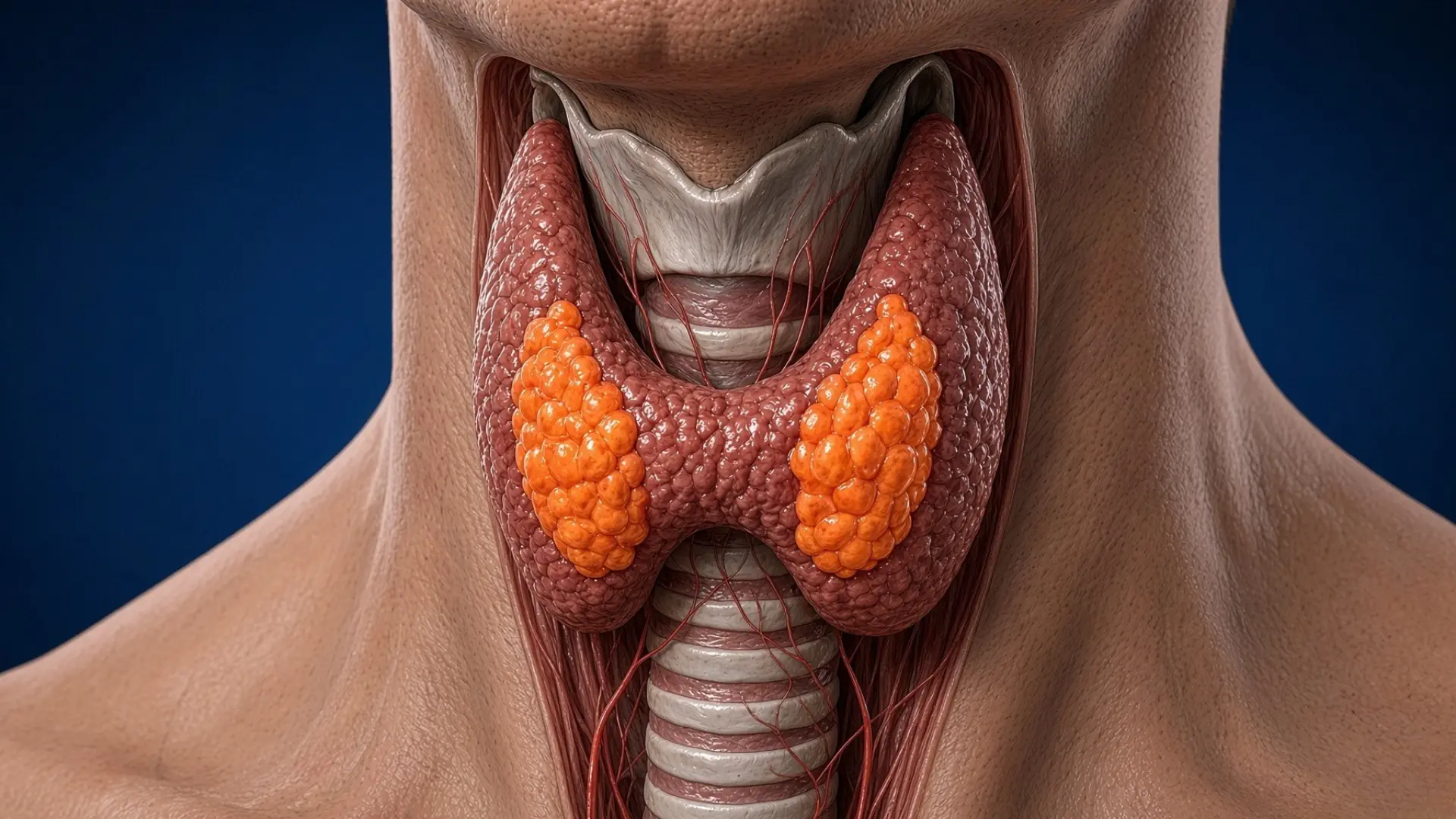
The thyroid and parathyroid glands occupy a compact area of the neck surrounded by structures essential for voice, swallowing, breathing and calcium regulation.
Surgery therefore requires more than removing abnormal gland tissue. The operation must be planned around the diagnosis while protecting important nearby nerves and glands.
START WITH THE DIAGNOSIS
What problem are we treating?
01
Thyroid disorders
Surgery may be considered for selected thyroid cancers, suspicious nodules, large or symptomatic goitre, compressive enlargement, recurrent cysts or certain hyperfunctioning nodules.
02
Parathyroid disorders
Overactive parathyroid glands can cause abnormal calcium levels that may affect bones, kidneys and other systems. Surgery removes the abnormal gland or glands when indicated.
A thyroid nodule does not automatically mean cancer
Thyroid nodules are common and many are benign. Finding a nodule begins an evaluation process, not an automatic pathway to surgery.
Assessment may include thyroid-function blood tests, neck ultrasound and fine-needle aspiration cytology to determine whether observation, further testing or surgery is appropriate.
CHOOSING THE EXTENT OF SURGERY
How much thyroid needs to be removed?
There is no universal answer. The operation should match the extent and biology of the disease rather than simply the presence of a thyroid lump.
01
Hemithyroidectomy or lobectomy
One thyroid lobe is removed. It may suit selected nodules, indeterminate lesions or certain limited thyroid cancers.
02
Total thyroidectomy
Most or all of the thyroid is removed for selected cancers, bilateral disease or other conditions requiring complete gland removal.
03
Neck dissection
If thyroid cancer has spread to lymph nodes, lymph-node surgery may form part of treatment.
What makes thyroid surgery delicate?
Important structures lie immediately behind and around the thyroid. Detailed anatomical knowledge and careful surgical planning are essential.
- Recurrent laryngeal nerves help control the vocal cords and should be identified and protected.
- Normal parathyroid glands regulate calcium and should be preserved whenever appropriate.
- The airway and major blood vessels lie close to the thyroid.
A DIFFERENT OPERATION WITH A DIFFERENT GOAL
Parathyroid surgery corrects a hormonal disorder.
Biochemical testing establishes the diagnosis before surgery, while imaging can help localise the abnormal gland.
Depending on the condition and localisation, surgery may involve focused parathyroidectomy or wider neck exploration. The goal is to correct inappropriate hormone production while preserving normally functioning tissue.
What to expect after surgery
Patients are monitored for wound healing, voice changes and calcium-related symptoms. After total thyroidectomy, lifelong thyroid-hormone replacement is generally required.
After parathyroid surgery, calcium and parathyroid hormone levels may need monitoring because calcium balance can change after overactive tissue is removed.
Questions worth asking before thyroid surgery
- Why is surgery being recommended?
- Do I need one thyroid lobe removed or the entire gland?
- Are any lymph nodes suspicious?
- What will happen to my thyroid hormone levels afterward?
- How will calcium be monitored?
- What are the implications for my voice?
COMMON QUESTIONS
Questions about thyroid & parathyroid surgery
General information to help you prepare. A consultation is required for advice about an individual diagnosis or treatment plan.
Does every thyroid nodule require surgery?
No. Many thyroid nodules are benign. Clinical assessment, ultrasound, blood tests and needle sampling help determine whether observation, further testing or surgery is appropriate.
Will I need thyroid medicine after surgery?
After total thyroidectomy, lifelong thyroid-hormone replacement is generally required. Requirements after removal of one lobe depend on the remaining thyroid function.
Why is voice discussed before thyroid surgery?
The recurrent laryngeal nerves that help control the vocal cords lie close to the thyroid, so voice and nerve protection are important parts of surgical planning.
How is parathyroid surgery planned?
Biochemical tests establish the hormonal diagnosis. Imaging may then help localise the abnormal gland and guide the operative approach.
Need evaluation for a thyroid or parathyroid condition?
Consult Dr Anup Srinivas for surgical assessment and an individualised plan based on your diagnosis, imaging and clinical findings.