
Laser & Robotic Surgery
Smaller access. Precise surgery. Carefully selected patients.
Evaluation for transoral laser microsurgery and robotic surgery where tumour location, stage and access make these approaches appropriate.
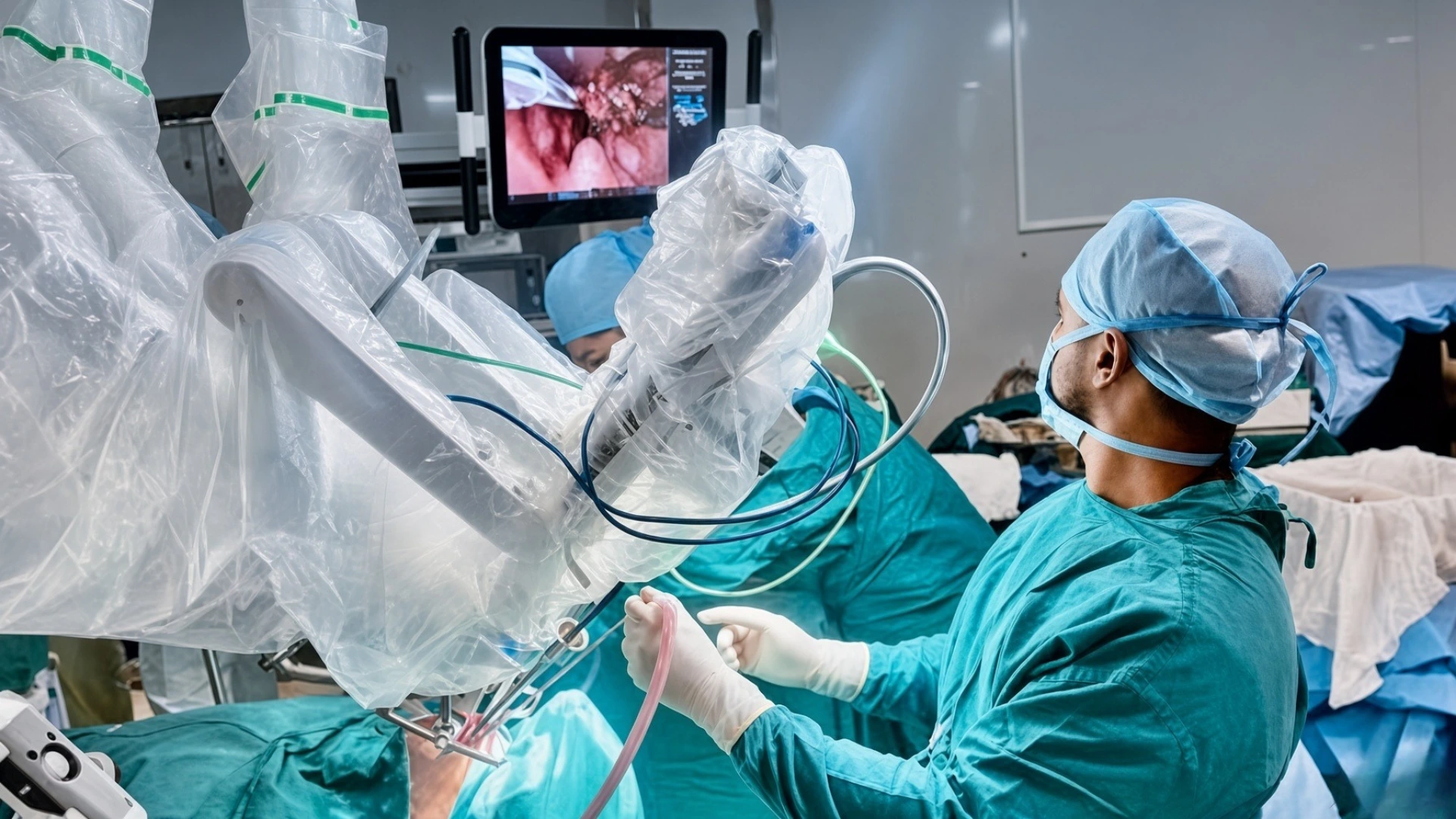
Smaller access. Precise surgery. Carefully selected patients.
Some head and neck tumours can be reached through the mouth using endoscopic, laser or robotic techniques. This may avoid larger external approaches in appropriately selected cases.
Laser and robotic surgery are tools—not automatically superior replacements for conventional surgery.
THE CENTRAL PRINCIPLE
Technology does not decide the operation. The tumour does.
The correct approach depends on tumour location, stage, access, surrounding anatomy, expected margins, functional consequences and the patient’s overall treatment plan.
Transoral laser microsurgery
Transoral laser microsurgery allows the surgeon to access selected lesions through the mouth and remove abnormal tissue using a laser under magnified visualisation.
It can be useful for selected lesions in the larynx and other accessible upper aerodigestive sites. For carefully selected early vocal-cord cancers, endoscopic CO₂ laser excision is among recognised treatment options.
Transoral robotic surgery—TORS
During TORS, the surgeon controls robotic instruments that enter through the mouth. Enhanced visualisation and precise instrument movement can help reach confined areas of the mouth and throat.
TORS may be considered for selected mouth and oropharyngeal tumours, including some early tonsil and base-of-tongue cancers.
Laser and robotic surgery are not competitors
Laser surgery may provide excellent access to one tumour, robotic instruments may suit another, and an open operation may remain the safest oncological approach for a third.
Experienced treatment planning means choosing the right technique for the tumour—not choosing a tumour to fit the available technology.
Potential advantages in suitable cases
A transoral approach may reduce the need for large external incisions and provide access to difficult anatomical areas. Depending on the procedure and the individual patient, potential advantages can include reduced tissue disruption and shorter recovery compared with more extensive open approaches.
These advantages should never come at the cost of adequate cancer treatment.
Who may not be suitable?
Not every head and neck tumour can—or should—be treated transorally. Extensive disease, involvement of major structures, inadequate access or inability to obtain appropriate margins may make another approach preferable.
COMMON QUESTIONS
Questions about laser & robotic surgery
General information to help you prepare. A consultation is required for advice about an individual diagnosis or treatment plan.
Is robotic surgery always the best option?
No. The best approach depends on the tumour’s site, stage, anatomy, access and the ability to obtain appropriate margins safely.
What is transoral laser microsurgery?
It is an approach in which selected lesions are reached through the mouth and removed using a laser under magnified visualisation.
What is TORS?
Transoral robotic surgery uses surgeon-controlled robotic instruments introduced through the mouth to reach selected tumours.
Who may not be suitable for a transoral approach?
Patients with extensive tumours, involvement of certain major structures, inadequate access or an inability to obtain appropriate margins may need another approach.
Is minimally invasive surgery possible for your tumour?
The answer requires review of the tumour’s site, stage, imaging and anatomy—not simply a choice between “laser” and “robot”.